James Turrell, The Artist Who Makes You Question What You’re Seeing
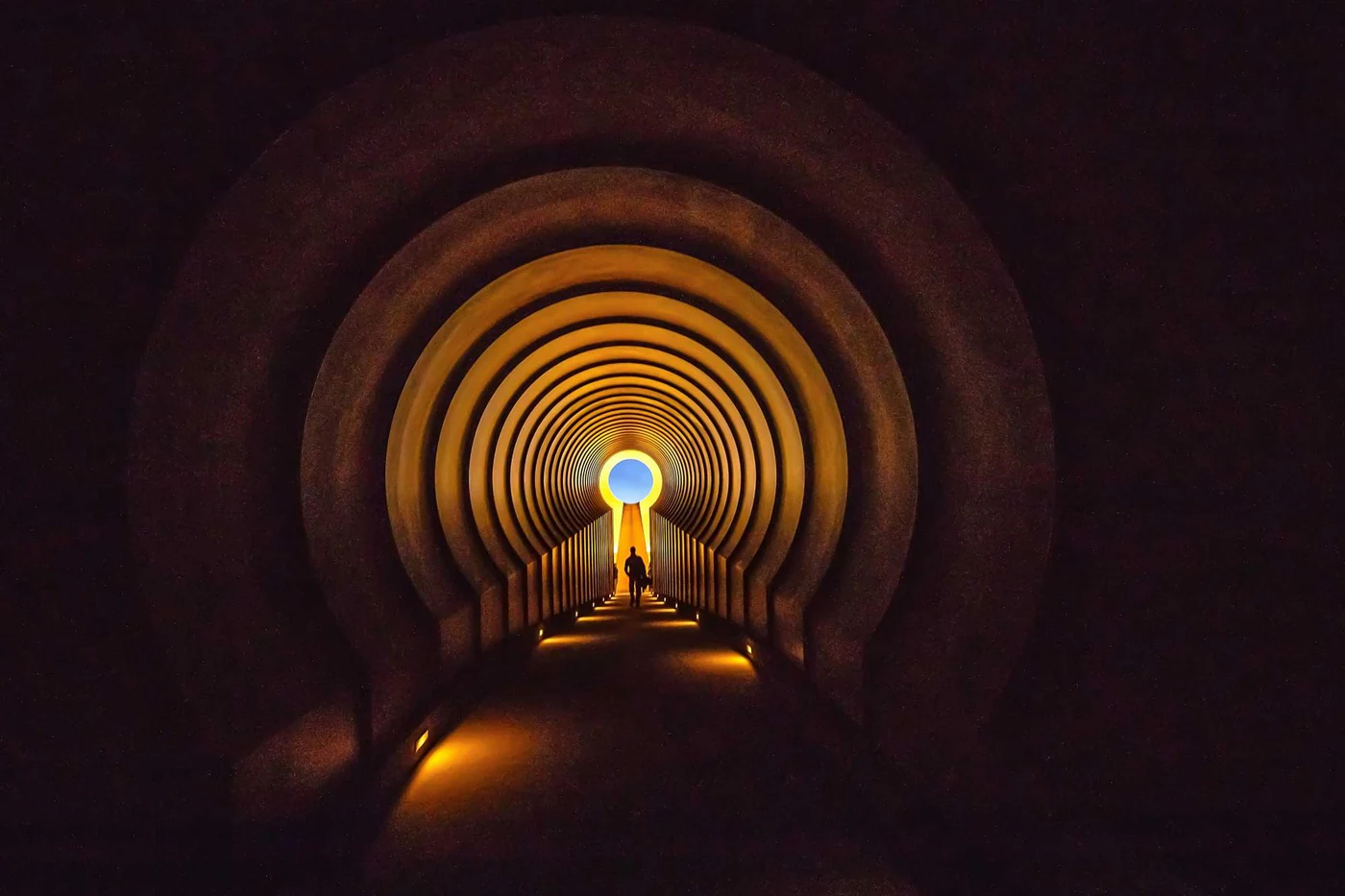
Imagine walking into a room filled with glowing light. There are no paintings, no sculptures, and you can barely tell where the walls end. The space seems to stretch forever, even though you know you're standing inside a building.
For a moment, you're not entirely sure what you're looking at.
That's exactly the point.
Welcome to the extraordinary world of James Turrell, an American artist who has spent decades exploring one fascinating idea: What if light itself could be the artwork?
An Artist Who Doesn't Need Paint
Most artists use paint, stone, or photography. Turrell works with something we experience every day but rarely think about: light.
Born in Los Angeles in 1943, Turrell studied perceptual psychology before becoming known for his extraordinary installations.
His approach is surprisingly simple. He wants you to pay attention to the act of seeing.
As Turrell once explained:
"My art is about your seeing."
It's a short statement, but it changes how you think about his work.
In some installations, colored light makes a flat wall appear to contain a glowing opening. In others, entire rooms seem to lose their edges.
Your eyes tell you one thing. Your brain tells you another.
And suddenly, looking becomes an adventure.
The Rooms That Seem to Go On Forever
One of Turrell's best-known types of installations is called a Ganzfeld.
These environments surround visitors with carefully controlled light and color, sometimes making it difficult to judge distance or recognize the boundaries of a room.
Imagine standing in a sea of soft blue or pink, unable to tell exactly how far away anything is.
There's no virtual reality headset. No computer-generated landscape.
Just light, color, and your own perception.
Turrell has described his fascination with the experience of light in another memorable statement:
"The best magic of all is the magic that is real."
And that's what makes these rooms so extraordinary. Nothing supernatural is happening. The light is real, the room is real, but your sense of space becomes wonderfully uncertain.
He Turned the Sky Into an Artwork
Turrell also creates installations called Skyspaces.
These are specially designed rooms with openings in their ceilings that frame a piece of the sky.
That might sound simple. After all, anyone can look upward.
But inside a Skyspace, carefully arranged lighting changes how the sky appears. At sunrise or sunset, its color can seem surprisingly intense or unfamiliar.
The sky hasn't changed.
The way you're seeing it has.
It's a fascinating idea: the world around us may stay exactly the same, while our experience of it changes completely.
His Biggest Project Is Inside a Volcano
Perhaps Turrell's most ambitious undertaking is Roden Crater, an extinct volcanic cinder cone in the Arizona desert.
He acquired the site in 1977 and began transforming it into an enormous artwork designed around natural light, celestial events, and the experience of looking at the sky.
Instead of hanging art on walls, Turrell is shaping tunnels, chambers, and openings that interact with sunlight, moonlight, and the heavens.
It's a project he has worked on for decades, and it remains unfinished.
Imagine spending much of your life turning an entire volcanic crater into a place for people to experience light.
That's quite a commitment to an idea.
What Are You Really Looking At?
The remarkable thing about James Turrell's art is that the artwork isn't always something you can point to.
Sometimes it's the color surrounding you. Sometimes it's a patch of sky. Sometimes it's the strange feeling that a wall has disappeared.
And sometimes, the most interesting thing in the room is what your own eyes are doing.
Turrell offers a particularly striking description of his relationship with light:
"My art deals with light itself."
Perhaps that's the secret behind his work. He isn't trying to show us something illuminated by light. He's asking us to experience light itself.
James Turrell doesn't just ask you to look at art. He makes you notice what it means to see.
The next time you watch the sky change color at sunset, you might find yourself looking a little longer.