The Lost Art of the American Neon Sign
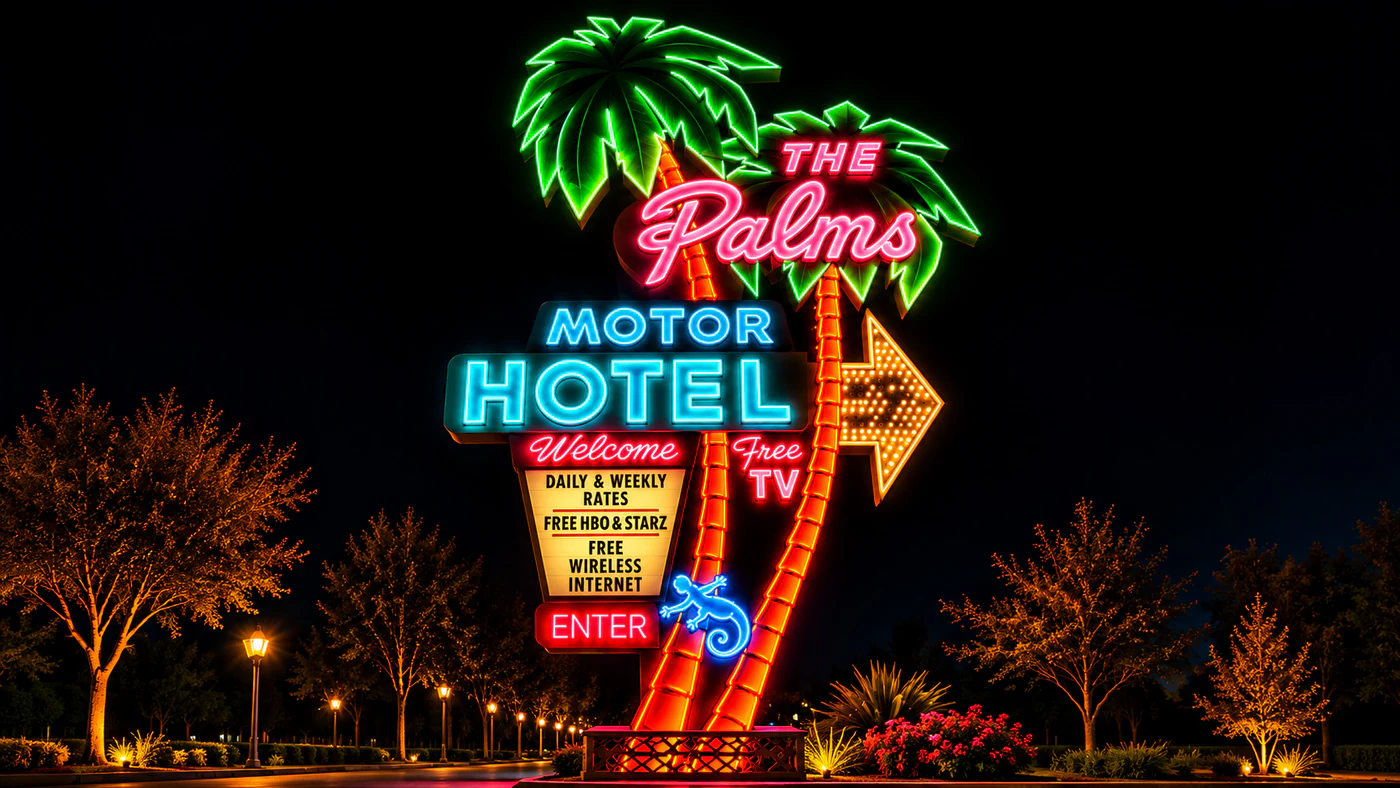
Before digital screens and LED billboards, glowing signs transformed ordinary American streets into colorful nighttime spectacles.
There was a time when America's streets came alive after dark. Giant glowing arrows pointed toward roadside diners. Pink flamingos welcomed travelers to motels. Cocktail glasses flickered above bars, and enormous letters lit up the night in brilliant reds, blues, and greens.
These weren't just advertisements. They were works of art.
When America Started Glowing
Neon lighting arrived in the United States in the early 20th century, and by the 1920s, businesses were discovering its irresistible appeal.
Unlike an ordinary light bulb, neon could be bent into almost any shape. Skilled craftspeople heated glass tubes over flames, carefully bending them into letters, animals, flowers, and elaborate designs.
By the 1940s and 1950s, neon had become part of the American landscape.
From Las Vegas casinos to Hollywood theaters, businesses competed to create the biggest, brightest, and most imaginative signs.
A simple motel might advertise itself with a glowing palm tree. A diner could have a giant steaming coffee cup above its entrance. Some signs even appeared to move, using sequences of flashing lights to create the illusion of animation.
The more outrageous the design, the better.
The Artists Behind the Glow
Every neon sign began with a human hand.
Before computers and automated manufacturing, sign makers sketched designs, selected colors, and bent glass into intricate shapes. It was a demanding craft requiring patience, precision, and an artistic eye.
The result was something that modern digital displays rarely reproduce: a handmade object with its own personality.
Where Did All the Neon Go?
Beginning in the latter half of the 20th century, cheaper illuminated plastic signs gradually replaced many traditional neon displays. Later, LED technology offered businesses another energy-efficient alternative.
Fortunately, not everyone was willing to let them disappear.
Museums and preservation groups began rescuing historic signs, recognizing them as important pieces of American design history.
Today, places such as the Neon Museum preserve the glowing landmarks that once advertised hotels, casinos, and roadside attractions.
A Little Magic After Dark
Perhaps the most remarkable thing about neon is how much personality it gave to ordinary places.
A regular place became a landmark. A little diner became unforgettable. Even a small motel along a desert highway could look magical beneath a glowing sign.
Modern screens can display millions of colors and change their messages in an instant.
But there's still something special about a piece of glass, bent by hand and glowing against the night sky.
Sometimes the most beautiful advertising was never really advertising at all. It was art.